One platform connecting startups, corporations, research institutions, regions and investors











 Playbook & Handbook · February 6, 2026
Winning Accelerator Playbook 2026 by BambuUP
 EDTECH: LEVERAGING AI-POWERED TECHNOLOGIES TO TRANSFORM THE LEARNING EXPERIENCE

1. Technology overview
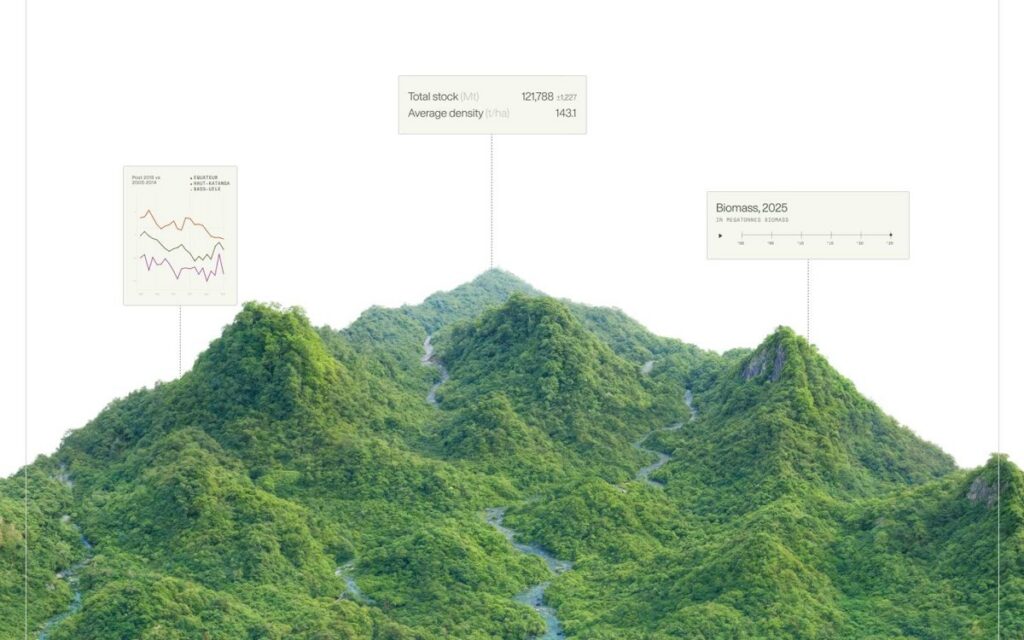
Chloris Geospatial is a forest carbon data company headquartered in Boston, Massachusetts, co-founded by CEO Marco Albani and chief science officer Dr. Alessandro Baccini. It addresses a core weakness of nature-based carbon markets: forest carbon stocks and their changes are hard to measure consistently, cheaply and verifiably across many projects.
The platform fuses satellite data with proprietary sensor fusion and machine learning to map above-ground biomass stock, biomass change and forest cover at 30-metre resolution, updated annually back to 2000. Estimates are validated against airborne LiDAR, GEDI and field surveys. On top of these layers Chloris offers project screening and due diligence, portfolio monitoring, dynamic baselines for Verra VM0047 reforestation projects, jurisdictional REDD+ data and a Biomass at Risk add-on with monthly loss alerts. Users include project developers, corporates with forest-risk supply chains, investors, raters and carbon standards.
2. Highlighted features & specifications
- Biomass data layers: above-ground biomass stock, biomass change and forest cover at 30-metre resolution since 2000.
- Project screening: satellite-based due diligence for forest carbon investments before purchase.
- Portfolio monitoring: tracks biomass performance across many project sites in one view.
- Dynamic baselines: removals and canopy disturbance monitoring for Verra VM0047 reforestation projects.
- Jurisdictional data: large-scale biomass modelling for jurisdictional REDD+ programmes such as ART TREES.
- Biomass at Risk and API: monthly loss alerts for portfolios, with data delivered through a documented API.
3. Potential application
A Vietnamese forestry company or provincial programme preparing an afforestation or REDD+ project can use the biomass history to build baselines and monitor removals. A bank or fund buying forest credits from Southeast Asia can screen projects before purchase. A coffee, rubber or timber exporter can monitor biomass loss in sourcing regions to support EUDR due diligence.
4. Benefits
A single, consistent biomass record from 2000 onward lets buyers and developers compare projects and baselines on the same basis instead of relying on sparse field plots. Annual 30-metre data and monthly risk alerts flag degradation and loss early, protecting credit integrity. Recognition as a Verra data provider and alignment with VM0047 and ART TREES ease use in registered projects, and a free data viewer allows initial screening at no cost.
5. Market trends & opportunities
Buyers of forest carbon credits now demand independent, satellite-based evidence after integrity concerns over REDD+ baselines, and new methodologies such as VM0047 and ART TREES rely on dynamic, remotely sensed baselines. Supply chain deforestation rules such as the EU EUDR also push commodity companies to monitor forests. Southeast Asia, including Vietnam with its forest carbon payment programmes, is a major source region for such projects.
6. Other information
Headquartered at 399 Boylston Street, Boston, USA. Raised a USD 8.5 million Series A in July 2025 led by Future Energy Ventures, with AXA IM Alts, At One Ventures, Cisco Foundation, Counteract and Orbia Ventures; funds support a new European hub. Partners include BeZero, MSCI and Permian Global (Katingan Mentaya peat forest project in Indonesia).